
Germany plays a central role in Europe’s automotive and clean-energy transition. As electric vehicle adoption accelerates, EV batteries have become one of the most strategic components of Germany’s industrial future. From large-scale battery factories to advanced research in next-generation cells, Germany is positioning itself as a key hub in the European EV battery ecosystem.
This article explains the future of the EV battery market in Germany, focusing on forecast trends, technology directions, manufacturing expansion, policy support, and what all of this means for automakers, suppliers, and consumers.
Why the EV Battery Market Is Critical for Germany
Germany’s economy has long been driven by automotive manufacturing. As electric vehicles replace internal combustion engines, batteries effectively become the new “engine” of the car. This shift makes battery production, sourcing, and innovation a national priority.
Key reasons the EV battery market matters for Germany include
• Maintaining global competitiveness of German automakers
• Reducing reliance on imported battery cells
• Supporting energy security and climate goals
• Creating high-value industrial jobs
• Strengthening Europe’s EV supply chain
Automakers such as Volkswagen, BMW, and Mercedes-Benz are closely tied to how fast and how well the domestic battery market develops.
Current State of the EV Battery Market in Germany
Germany’s EV battery market is currently in a rapid build-up phase. Historically, most battery cells used in German EVs were imported from Asia. That is now changing as Europe pushes for local manufacturing.
Today’s landscape includes
• Large battery cell plants under construction or expansion
• Battery pack assembly facilities near vehicle plants
• Strong collaboration between automakers and battery suppliers
• Growing public and private investment in battery research
Lithium-ion batteries dominate current production, especially nickel-based and LFP chemistries, while next-generation technologies are under development.
Read Also: Tesla Model 3 Set to Redefine Premium Electric Sedans in India by 2026
Market Forecast: How the EV Battery Market in Germany Is Expected to Grow
Over the next decade, Germany’s EV battery market is expected to grow steadily as EV sales increase and domestic production capacity expands.
Key forecast drivers
• Rising EV adoption across passenger cars and commercial fleets
• EU emissions regulations pushing electrification
• Expansion of local gigafactories
• Government incentives for clean manufacturing
While growth rates may fluctuate year to year, the long-term outlook remains positive. With batteries becoming one of Germany’s most valuable automotive components by the early 2030s.
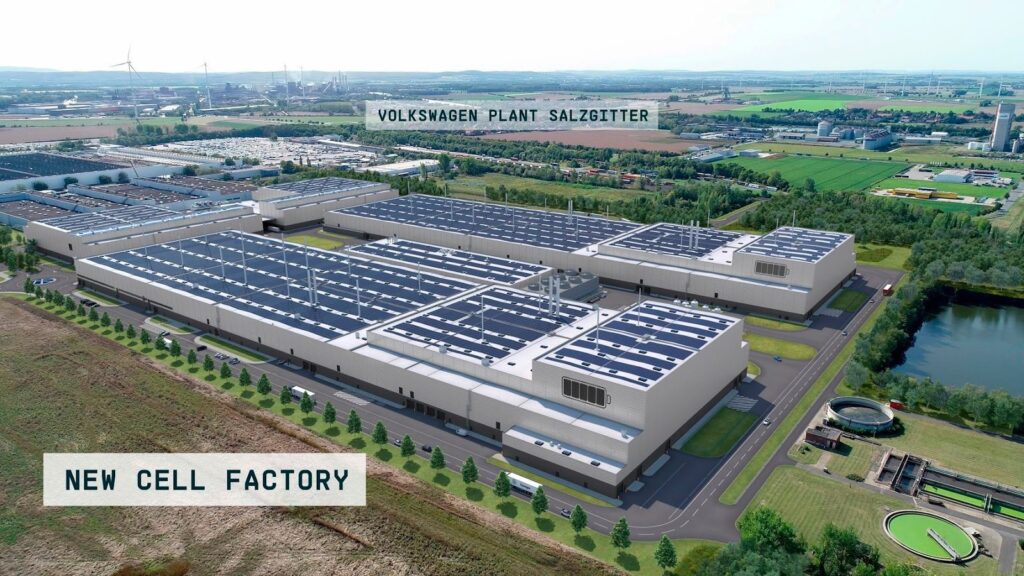
Expansion of Battery Manufacturing Capacity
Germany is investing heavily in scaling battery manufacturing to support domestic EV production and reduce import dependence.
Major trends in manufacturing expansion include
• Large-scale battery cell factories near automotive hubs
• Modular production lines that support multiple chemistries
• Increasing automation to control cost and quality
• Closer integration between battery plants and vehicle factories
This expansion is critical for keeping German-made EVs competitive in global markets.
Key Battery Technologies Shaping the German Market
The future of Germany’s EV battery market will not depend on a single technology. Instead, multiple battery chemistries will coexist, each serving different vehicle segments.
Important technology trends include
• Continued use of lithium-ion batteries for mass-market EVs
• Growing adoption of LFP batteries for cost-sensitive models
• Ongoing research into solid-state batteries for premium vehicles
• Improvements in battery management systems for safety and lifespan
German companies are focusing on balancing performance, cost, and sustainability rather than chasing one breakthrough alone.
Solid-State Batteries and Advanced Research
Germany is one of Europe’s leaders in solid-state battery research, which is often seen as the long-term future of EV energy storage.
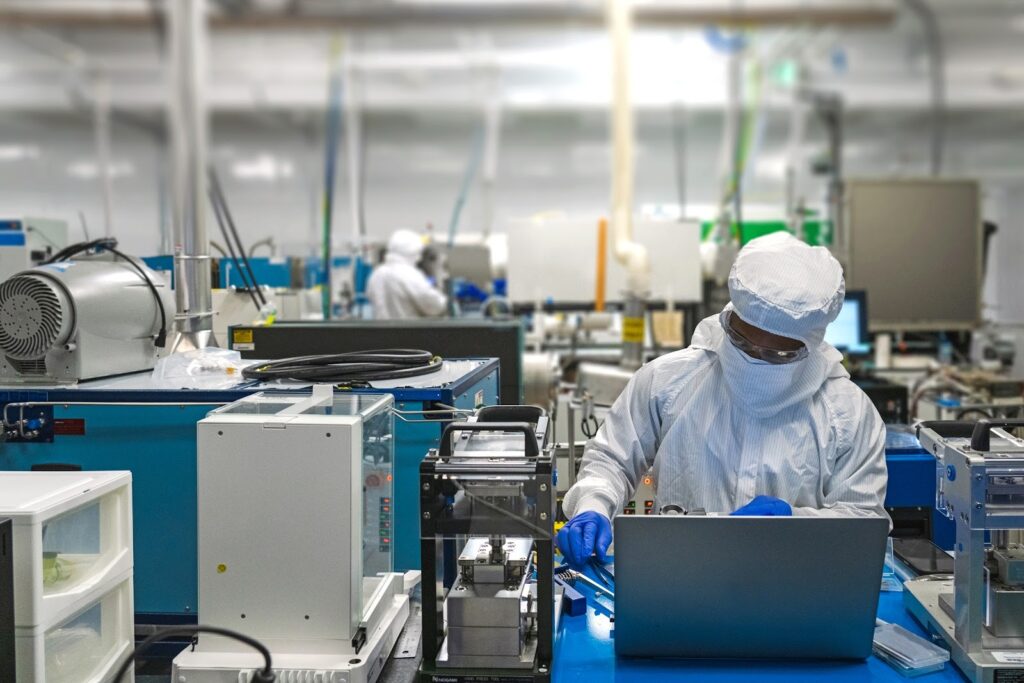
Solid-state batteries promise
• Higher energy density for longer range
• Improved safety with reduced fire risk
• Faster charging potential
• Longer battery lifespan
However, large-scale production remains challenging and costly. As a result, solid-state batteries are expected to appear first in premium or limited-volume EVs before wider adoption.
Role of Recycling and Circular Economy
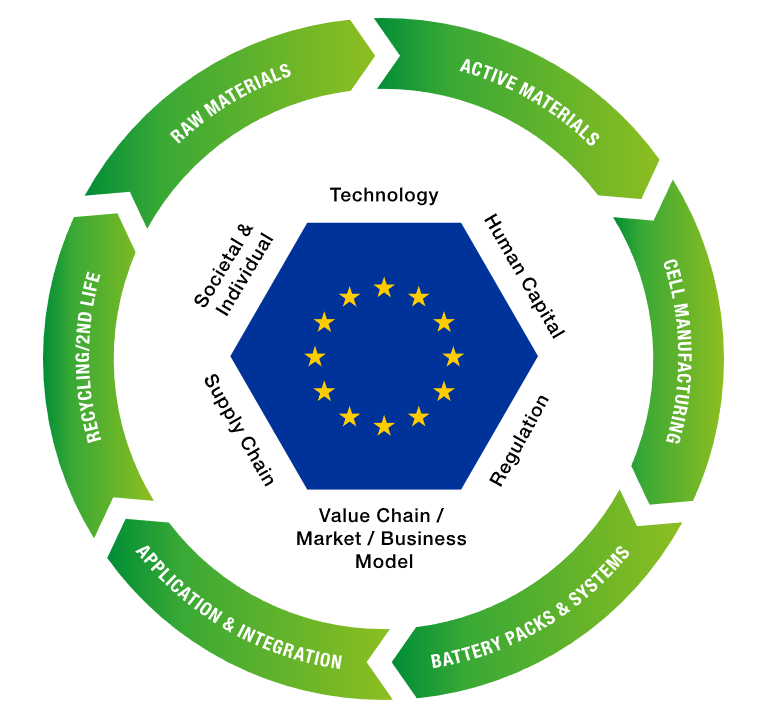
Battery recycling is becoming a central pillar of Germany’s EV battery strategy. With millions of EVs expected on European roads, managing end-of-life batteries responsibly is essential.
Key developments include
• Advanced recycling facilities to recover lithium, nickel, and cobalt
• Second-life use of EV batteries in grid and energy storage
• Stricter EU regulations on battery lifecycle management
• Reduced environmental impact and raw material dependency
Germany’s strength in engineering and environmental regulation gives it an advantage in building a strong battery recycling ecosystem.
Policy Support and EU Influence
Government policy plays a major role in shaping the EV battery market in Germany.
Supportive factors include
• EU climate targets and emissions standards
• Subsidies and funding for battery manufacturing and R&D
• Regulations encouraging local sourcing and recycling
• Cross-border collaboration within the European Union
These policies are designed to ensure that Europe, and Germany in particular, remains competitive against battery supply chains in Asia and North America.
Opportunities in the German EV Battery Market
The evolving battery market presents several opportunities.
1. For automakers
• Greater control over supply chains
• Reduced cost volatility
• Faster innovation cycles
2. For suppliers and startups
• Demand for battery materials and components
• Growth in battery software and management systems
• Expansion of recycling and second-life services
3. For consumers
• Improved EV availability
• Better battery warranties and reliability
• Gradual cost reductions over time
Challenges Facing the Market
Despite strong growth prospects, challenges remain.
Key challenges include
• High energy costs affecting manufacturing
• Competition from established Asian battery producers
• Securing sustainable raw material supply
• Scaling new technologies without cost overruns
How Germany addresses these challenges will shape its long-term position in the global EV battery market.
What This Means for EV Buyers in Germany
For consumers, the evolving battery market translates into gradual but meaningful benefits.
Expected impacts
• More locally produced EVs
• Improved battery safety and durability
• Broader choice of EV models and price points
• Stronger focus on sustainability and recycling
Buyers do not need to wait for future breakthroughs. Current EVs already meet most daily driving needs, while battery technology continues to improve in the background.
Read Also: MG Windsor EV: India’s Best-Selling Electric Vehicle Redefining Style, Space, and Smart Mobility
Common Misconceptions About the EV Battery Market
Several myths persist.
Myth1: Germany will instantly become battery independent
Reality: Reducing imports is gradual and requires time.
Myth2: One battery technology will replace all others
Reality: Multiple chemistries will coexist.
Myth3: Battery innovation will stop once factories are built
Reality: Continuous research and improvement are essential.
Frequently Asked Questions
Is Germany becoming a major EV battery producer
Yes, Germany is rapidly expanding battery manufacturing capacity.
Are solid-state batteries coming soon
They are progressing but will arrive gradually, starting with premium applications.
Will EV batteries become cheaper in Germany
Costs are expected to decrease over time as production scales.
How important is recycling
Recycling is critical for sustainability and material security.
Should buyers wait for future batteries
For most users, current EV technology is already practical and reliable.
Conclusion
The future of the EV battery market in Germany is defined by steady growth, technological diversity, and strong policy support. As the country transitions from engine manufacturing to battery-centric mobility, batteries are becoming a strategic industrial asset rather than just a vehicle component.
Germany’s focus on local manufacturing, advanced research, and circular economy practices positions it well for long-term success. While challenges remain, the overall outlook is positive. For automakers, suppliers, and consumers alike, the evolving EV battery market will play a decisive role in shaping Germany’s electric mobility future over the next decade.
Related stories Keep reading
 EV Battery TechLFP vs NMC EV Batteries: Which Chemistry is Best for Indian Summers? Thermal Runaway, Cycle Life & DegradationNov 5, 2026 · 6 min read
 EV Battery TechUnderstanding C-Rate in EV Fast Charging: How 0.5C vs 3C Charging Speeds Impact Lithium Cell Lifespan & WarrantyOct 23, 2026 · 7 min read
 EV Battery TechHow Extreme Indian Heat Affects EV Batteries: Thermal Runaway Science, Liquid Glycol Cooling & 5 Summer Care RulesOct 23, 2026 · 7 min read
Pingback: Best EV Bikes with GPS Security Features in India - evfacts.in
Pingback: Latest Electric Pickup Trucks Coming to the USA - evfacts.in